

During the Second World War, as fear and devastation spread across the globe, a generation stepped forward and answered the call to serve. From the bustling streets of Douglas to the fishing harbour of Peel, countless young men left behind their homes and families in the defence of freedom. Among the brave souls who departed the Isle of Man but never returned was Sergeant John Harold Shimmin.
John was born at Rose Cottage, the Dhoor, the son of William Ernest Shimmin and Anna Shimmin. His father, a schoolteacher at Dhoor School, instilled in him strong values of integrity and responsibility from an early age, principles that would shape the man he would become. He grew up alongside his siblings in the close-knit rural heart of the island, surrounded by the quiet beauty of rolling countryside, open fields, and a rugged coastline shaped by the sea. Later, the family moved to Cronk-y-Voddy, where his father became headmaster, further strengthening the sense of discipline, education, and duty that defined his upbringing.
In a world engulfed by war, John made a life-altering decision. Determined to play his part in the struggle for freedom, he joined the Royal Air Force Volunteer Reserve and left the Isle of Man. He began his training as a navigator, dedicating himself fully to his role and duties. Day by day, he developed the discipline, skill, and resolve needed for operational service. His determination carried him through the intensity of his instruction, preparing him for the dangerous operations over occupied Europe.
Throughout his service, John demonstrated remarkable bravery, showing exceptional composure in demanding flying conditions. His final mission came on 11 May 1944. On that fateful night, his de Havilland Mosquito aircraft departed from RAF Little Snoring in Norfolk at 23:42. Alongside Pilot Officer Thomas Stanley Ecclestone, he was engaged in a patrol over Gilze-Rijen airfield in the Netherlands. In the early hours of the morning, tragedy struck. At approximately 2 a.m., the aircraft was seen flying at low altitude before colliding with a searchlight installation near Wemeldinge in the Dutch province of Zeeland. Both men were killed instantly. John was only 18 years old. Their bodies were later recovered by German forces and handed to local authorities, who buried them in the cemetery at Wemeldinge.
News of John’s death sent shockwaves across the Isle of Man, leaving his family and friends devastated. A young man with so much life still ahead of him had been lost in an unforgiving war, creating a void that could never be filled.
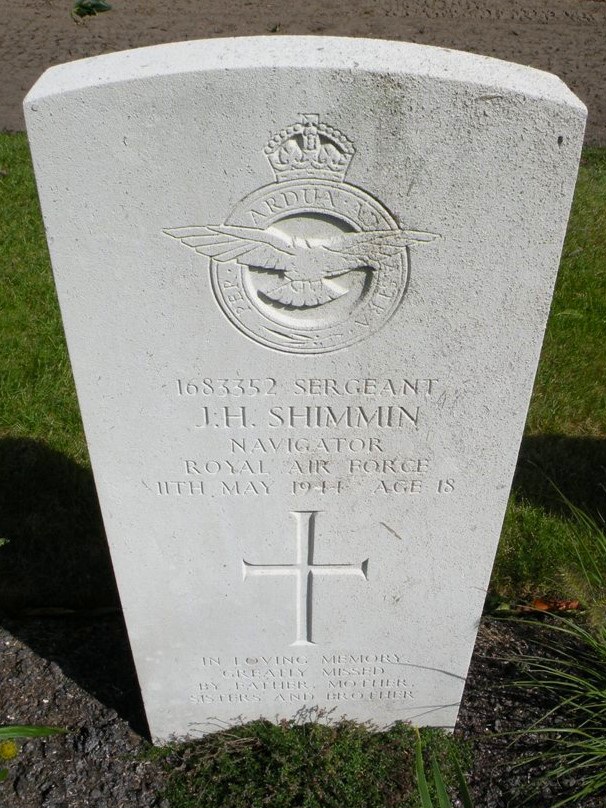
Following the war, his remains were reinterred at Bergen-op-Zoom War Cemetery in the Netherlands, where he now rests among 1,284 Commonwealth servicemen who also gave their lives in the cause of peace and liberty. He lies side by side with Pilot Officer Thomas Stanley Ecclestone, united in sacrifice and remembrance. His gravestone stands as a lasting reminder of a young life cut short, with an inscription echoing the grief of those he left behind: “In loving memory. Greatly missed by father, mother, sisters and brother.”
When his country called, Sergeant John Harold Shimmin fulfilled his duty with pride and dignity. Now it is our responsibility to honour and preserve his legacy, ensuring his sacrifice is never forgotten. His story reflects those of countless fallen heroes from the Isle of Man, young men who went overseas and gave their lives on foreign soil in the name of freedom. Though their journeys ended far from the island they called home, their courage and memory remain forever woven into the history of the Isle of Man.
Photographs of Sergeant Shimmin and of his grave at Bergen-op-Zoom War Cemetery courtesy of Peter Hakze.